Accidents happen fastest when danger is underestimated. In industrial and commercial environments, one of the most overlooked yet critical safety failures occurs at the circuit breaker panel. A single misstep—someone flipping a breaker back on during maintenance—can lead to arc flashes, electrocution, or worse. That’s where lockout tagout breaker locks come in. These small but vital devices physically prevent unauthorized or accidental re-energizing of electrical circuits, enforcing control during servicing.
They’re not optional extras. They’re engineered safeguards that turn safety procedures into physical reality. Understanding how to select, apply, and manage breaker locks within a formal Lockout/Tagout (LOTO) program isn’t just about compliance—it’s about preventing life-altering incidents.
Why Breaker Lockout Is Non-Negotiable
Breakers are designed to interrupt current—but they're also easy to reset. That convenience becomes a hazard during maintenance. A technician working on a motor control center, HVAC unit, or production line assumes the circuit is dead. But if a coworker, unaware of ongoing work, resets the breaker, the system re-energizes instantly.
This is exactly what OSHA’s Control of Hazardous Energy standard (29 CFR 1910.147) aims to prevent. The rule mandates that before servicing equipment, energy sources must be isolated and rendered inoperative. Lockout tagout breaker locks serve as the physical enforcement mechanism.
Common scenarios where breaker locks prevent disaster: - A mechanic replaces a conveyor drive motor—breaker lock ensures no sudden startup. - An electrician troubleshoots a fused disconnect—padlock prevents re-energizing. - A facilities team cleans high-bay lighting—locks on the panel protect workers at height.
Without a lock, it’s not a procedure. It’s a hope.
How Lockout Tagout Breaker Locks Work
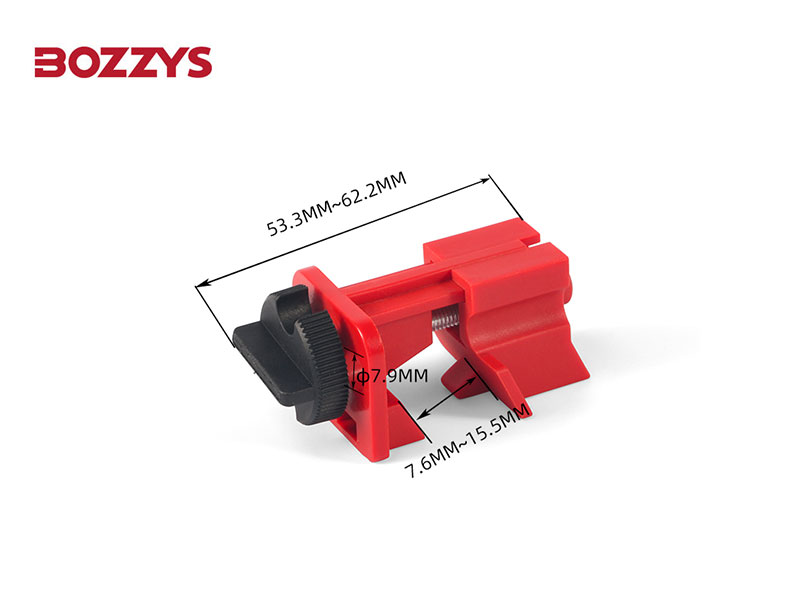
At their core, breaker locks are mechanical devices that attach to circuit breakers, preventing the toggle from being switched to the “on” position. They’re typically made from durable, non-conductive materials like nylon or polycarbonate, ensuring both strength and electrical safety.
Most designs fall into three categories:
1. Sliding Locks (Clip-On Style)
These snap over the breaker toggle and slide into place. A padlock is then inserted through a hasp to secure it. Ideal for standard breakers, they’re fast to install and remove.
2. Hinged Locks (Pivot Style) Feature a hinged arm that clamps over the handle. Offers more stability on larger or double-pole breakers. Often used in industrial panels.
3. Universal Adapter Kits Designed to fit multiple breaker types. Include interchangeable clips or brackets. Useful in facilities with mixed equipment.
All types allow only authorized personnel—those holding the key—to restore power. When combined with a tag, which details who locked the device, when, and why, the system becomes both physical and procedural.

Key Features to Look for in a Quality Breaker Lock
Not all breaker locks are created equal. The difference between an effective lock and a false sense of security often comes down to design and material.
1. Material Durability Choose non-conductive, UV-resistant polymers. Nylon and reinforced polycarbonate resist cracking under heat, cold, or impact—critical in harsh environments.
2. Padlock Compatibility Ensure the lock accepts standard shackle diameters (typically up to 7/16"). Some models integrate secondary lock points for group lockout.
3. Breaker Size Compatibility Verify fit across your panel’s breaker types. Look for adjustable or modular designs if you have varied equipment.
4. Visibility and Tag Integration A built-in tag holder ensures documentation stays with the lock. Bright colors (red, yellow) improve visibility.
5. Ease of Use Technicians won’t use clunky tools. Prioritize one-handed installation and quick release—without compromising security.
Top 5 Lockout Tagout Breaker Locks on the Market
Choosing the right breaker lock means balancing fit, function, and durability. Here are five widely trusted options used across industries:
| Product | Type | Key Feature | Best For |
|---|---|---|---|
| Seton 25650 Breaker Lockout Device | Sliding Clip | Quick install, red nylon body | Standard single-pole breakers |
| Grace Industries G-100 Series | Hinged | Heavy-duty, fits tandem breakers | Industrial and high-amperage panels |
| SafelyNow Universal Breaker Lock | Adjustable Adapter | Fits 95% of breakers, modular | Mixed-panel environments |
| Brady B140 Breaker Lockout | Clip-On | Integrated tag holder, OSHA-compliant | Facilities with strict documentation |
| Master Lock 4400K Box Lockout Kit | Multi-Device | Includes breaker locks and hasps | Teams needing full LOTO kits |
Each has pros and trade-offs. The Seton model is a go-to for speed and cost. Grace Industries dominates in heavy industry. SafelyNow’s universal fit reduces inventory complexity.
Common Mistakes That Undermine Breaker Lock Effectiveness
Even the best hardware fails when misused. These frequent errors compromise LOTO integrity:
- Using makeshift solutions – Tape, zip ties, or bent metal are not lockout devices. They don’t meet OSHA standards and can be easily removed.
- Skipping the tag – A lock without a tag leaves no trace of accountability. Who applied it? When? Why? The tag completes the loop.
- Group lockout without proper protocol – When multiple workers service one machine, each must apply their own lock. Using a single lock undermines individual control.
- Poor fit or wear over time – A cracked or loose lock may not fully prevent actuation. Inspect devices monthly.
- Assuming "off" means safe – Breakers can fail. Always verify de-energization with a voltage tester after locking out.
A lock is only as strong as the procedure behind it.
Integrating Breaker Locks Into Your LOTO Program

Lockout tagout isn’t a toolbox item—it’s a process. Breaker locks function within a structured sequence:
- Preparation – Identify energy sources. Review shutdown procedures.
- Shutdown – Turn off equipment via normal controls.
- Isolation – Open disconnects, pull breakers to “off.”
- Application of Locks – Attach breaker locks and padlock with personal lock.
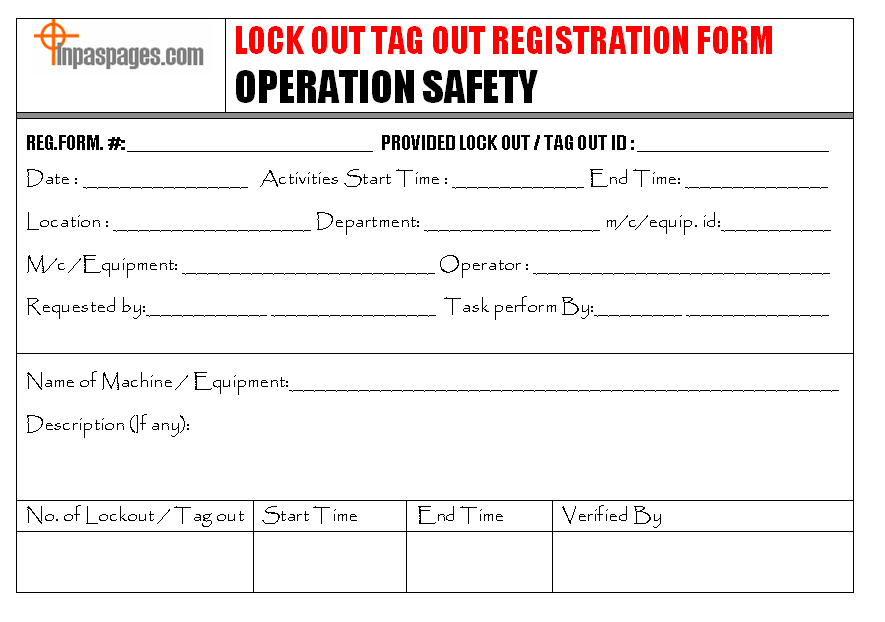
- Tagging – Complete tag with name, date, reason.
- Verification – Test for zero energy using a meter.
- Restoration – Only the lock’s owner removes it after work completion.
Training is critical. OSHA requires re-certification every 12 months. Simulate real-world scenarios: What if a worker leaves their lock on? What if a tag is damaged?
Use breaker locks consistently—even for “quick fixes.” Most electrical incidents occur during short-duration tasks.
Special Considerations for Complex Panels
Not all panels are standard. Here’s how to handle edge cases:
Tandem or Double-Throw Breakers
These occupy one slot but control two circuits. Standard clip-on locks may not fit. Use hinged or universal models with extended arms.
High-Density Panels In tight spaces, low-profile locks prevent interference with adjacent breakers. Look for slim designs like the Brady B140.
Multi-Lock Scenarios When multiple trades work on one system (e.g., electricians and plumbers), use a group lockout hasp. Each worker applies their lock to a central point.
GFCI or AFCI Breakers
These often have test buttons that protrude. Confirm your lock doesn’t obstruct reset functionality post-maintenance.
Real-World Example: Preventing a Near-Miss
At a Midwest food processing plant, two technicians were replacing a failed pump motor. One isolated the circuit at the main panel and applied a breaker lock. The second began disassembly.
Meanwhile, a third worker—unaware of the maintenance—entered the control room and attempted to reset a tripped breaker. He found it locked out. The tag read: “DO NOT OPERATE – Motor P-7 Servicing. J. Rivera, 9:15 AM.”
He notified supervision. The lock prevented a direct energization of the open motor housing—where the second technician’s hand was inside the coupling.
An investigation revealed the LOTO procedure was followed correctly—but communication failed. The incident triggered a revision: now, all lockouts require a work permit logged in the CMMS, with alerts sent to shift leads.
The lock didn’t just stop a breaker. It stopped a potential fatality.
Choose the Right Lock, Then Enforce the Process
Lockout tagout breaker locks are more than plastic clips—they’re the last line of defense between routine maintenance and catastrophe. Select devices that match your equipment, train teams relentlessly, and audit compliance regularly.
Don’t wait for a close call to act. Install the right locks. Train your team. Verify every time.
Safety isn’t a device. It’s a discipline. And it starts at the breaker panel.
Frequently Asked Questions
What is the purpose of a lockout tagout breaker lock? It physically prevents a circuit breaker from being turned on during maintenance, ensuring worker safety and compliance with OSHA regulations.
Can one lockout device fit all breaker types? No—breakers vary by size and design. Universal or adapter-style locks offer broad compatibility but should be tested for secure fit.
Is tagging required even if a lock is used? Yes. Tags provide critical information: who locked the device, when, and why. OSHA requires both lock and tag in most cases.
Can breaker locks be reused? Yes, most are designed for repeated use. Inspect for cracks, warping, or wear before each application.
Are plastic breaker locks safe around high voltage? Yes—high-quality locks are made from non-conductive, flame-resistant materials tested for electrical safety.
Do I need a different lock for tandem breakers? Often. Tandem breakers may require hinged or adjustable locks to cover both toggles securely.
Who should apply and remove a breaker lock? Only the authorized employee who performed the maintenance should remove their lock. No exceptions.
FAQ
What should you look for in Lockout Tagout Breaker Locks: Secure Electrical Isolation? Focus on relevance, practical value, and how well the solution matches real user intent.
Is Lockout Tagout Breaker Locks: Secure Electrical Isolation suitable for beginners? That depends on the workflow, but a clear step-by-step approach usually makes it easier to start.
How do you compare options around Lockout Tagout Breaker Locks: Secure Electrical Isolation? Compare features, trust signals, limitations, pricing, and ease of implementation.
What mistakes should you avoid? Avoid generic choices, weak validation, and decisions based only on marketing claims.
What is the next best step? Shortlist the most relevant options, validate them quickly, and refine from real-world results.